
What Is Blast Freezing?
A Complete Guide to Shock Freezing Food Products
Blast freezing, also referred to as shock freezing or flash freezing, is the process of rapidly reducing the temperature of food products to preserve their nutrients, taste, and texture. Widely used across the food industry for meat, fish, dairy, bakery, and plant-based goods, it is widely regarded as the preferred method across the industry for commercial food preservation.
How the Blast Freezing Process Works
Blast freezers operate at significantly lower temperatures than standard freezing units, typically between -30°C and -40°C (-22°F to -40°F). Our blast freezers can accommodate up to 33 pallets at a time and are suitable for a broad range of products including meat, fish, dairy, bakery, and plant-based goods.
Whether you are freezing ambient or chilled products, the goal is always the same: achieve a consistent core temperature of -18°C (0°F) throughout the entire pallet. That consistency is not just about quality, it is a food safety requirement, and essential for HACCP and cold chain compliance.
How Long Does Blast Freezing Take?
Bread, a low-density product, usually takes around 8–12 hours to reach temperatures around -18°C. Extremely dense products, such as butter, pork and beef, can take much longer to freeze. The timing is very important, and here at Magnavale, we ensure validation trials are conducted at the beginning of any new operational process to ensure food safety and quality consistency.
Timescales vary depending on the density of the product and its packaging. As a general rule, the denser the product, the longer it takes to freeze, but even then, blast freezing is considerably faster than conventional methods.
Why Does Freezing Time Matter?
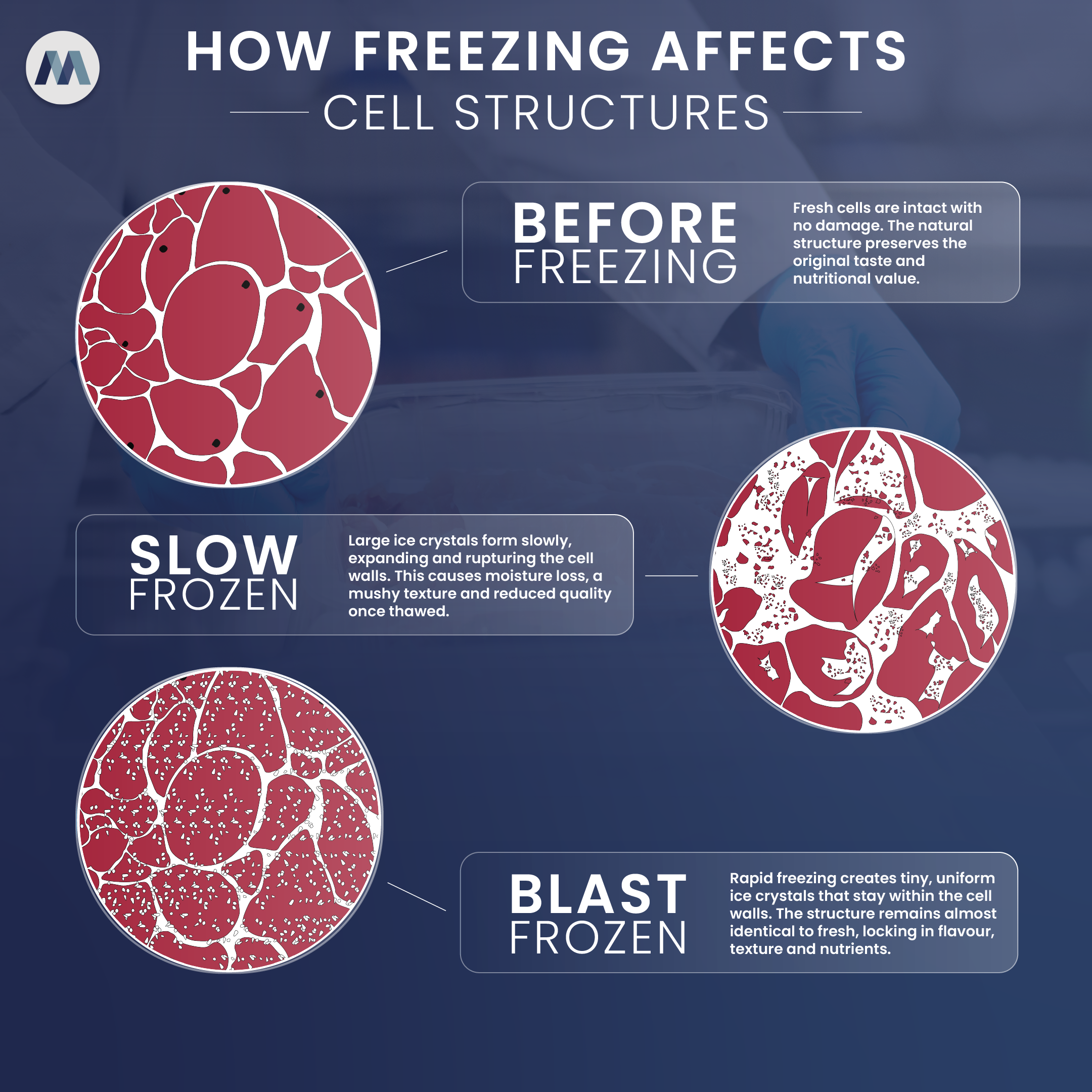
It comes down to ice crystal formation. When water freezes, its molecules expand. Inside food, that expansion puts pressure on cell walls, and if the freezing process is too slow, the ice crystals that form are large enough to rupture those walls entirely. The result? Compromised texture, flavour loss, and increased drip loss on thawing.
Blast freezing works by driving the temperature down as quickly as possible using highly cooled forced air. The faster the freeze, the smaller the ice crystals — and the less damage to the cellular structure of the food. The end product retains much more of its original quality, making blast freezing the clear choice for anyone serious about preserving what they have produced.
Frequently Asked Questions About Blast Freezing
What temperature does a blast freezer operate at?
Blast freezers typically operate between -30°C and -40°C (-22°F to -40°F), this super-cooled air reduces the temperature of the products within rapidly.
How long does blast freezing take?
It depends on the density of the product and how it is packaged. Low-density items like bread take 8–12 hours to reach -18°C, while dense products like meat and butter take longer. Validation trials are conducted for each new product.
What is the difference between blast freezing and regular freezing?
Blast freezing uses forced air at extremely low temperatures to freeze products much faster than conventional freezing. This rapid process creates smaller ice crystals within the organic cells, which preserves the taste, texture, and nutritional value of the food.
What products can be blast frozen?
Blast freezing is suitable for a wide range of food products including meat, fish, seafood, dairy, bread, pastries, fruit, vegetables, and plant-based goods.
Does Magnavale offer blast freezing at all locations?
Yes, Magnavale offers blast freezing as well as other cold-chain value-added services at all our locations, helping our customers reduce unnecessary journeys from their supply chains and cut cost, risk, and complexity from their operations.
More on Blast Freezing & Value-Added Services
Rapid Air Up-Tempering
In the food industry, maintaining product quality while efficiently managing temperature…
What is Blast Freezing?
Blast Freezing: What it is and how it works. Using Blast freezing to preserve food quality and…
Contract Packing & Repacking
Contract Packing At Magnavale we offer a variety of contract packing and repacking…
Date & Batch Code Printing
Date Coding & Batch Coding Date coding is one of many critical processes within food…